in·som·ni·a
noun: inability to obtain sufficient sleep, especially when chronic; difficulty in falling or staying asleep; sleeplessness
Lately? There’s been A LOT on my mind. I recently launched a new project and it’s all good. It’s just – a lot you know? And it’s keeping me up at night. From the running to-do list to the many what if’s, the thoughts play like an endless tape causing the undesired state of sleeplessness.
The usual remedies? Not. Working.
From sheer excitement (and probably an overdose of adrenalin), I’ve already been running on much less sleep than normal. But what exactly is normal when it comes to sleep?
Opinions vary, but there’s some consensus that the optimal amount in humans runs 7 – 8+ hours for adults. I’ve been averaging more like 4-6.
Hmm, should I be exhausted?
I counted sheep.
I listened to a meditation on my iPod.
I ran through my to-do’s for tomorrow.
Two hours later, I sat in front of this eerily lit screen at 4:29 am.
A few years ago I did a very intense 6 month leadership program and one of the unofficial mantras of the program was,
“You can sleep when you’re dead.”
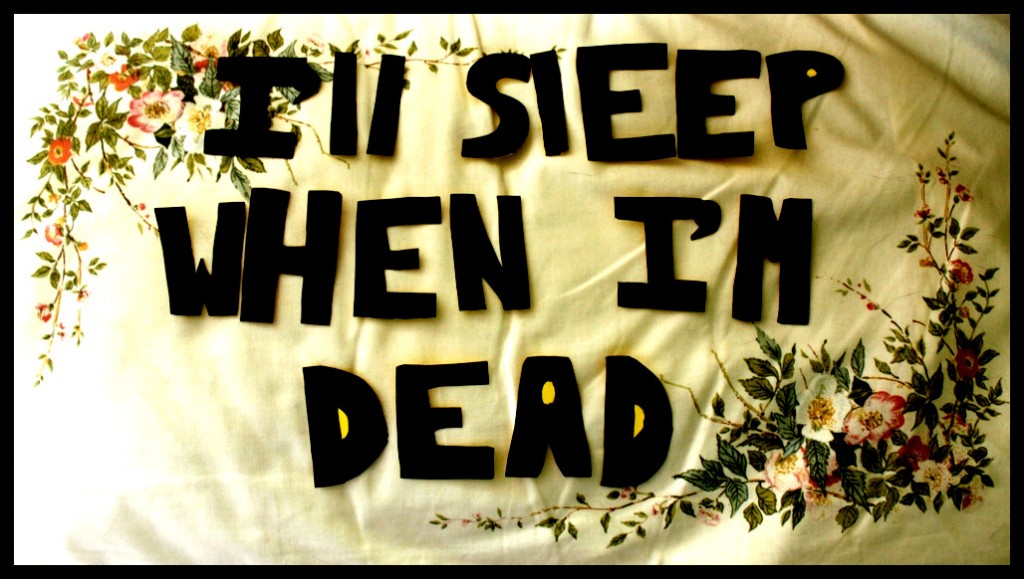
At the time, I thought that was crazy.
But here’s the thing.
I was more alive, productive and effective in those six months than ever before! I learned that I could handle way more than I thought I was capable of.
That mantra?
Busted through some major beliefs I had about what my body ‘needed’ and what was possible.
That breakthrough?
Gave me a richer experience of life and I stopped worrying so much about what I could or couldn’t do in a day.
“Insomnia is my greatest inspiration.” – Jon Stewart
Right now at 5:27 am, should I be exhausted?
I think I”ll be just fine.
Over to you:
- What beliefs do you have about what you need or think you can handle?
- Pick one and experiment. Is what you believe really true?
Damn you. Get out of my head. : D
Were you awake at 4:30am? Damn, I should have called you 😉
Damn you. Get out of my head. : D
Were you awake at 4:30am? Damn, I should have called you 😉
my husband has adopted this philosphy because sleep often alludes him
I agree with you as well because i have been working on some 3hr nights and i am still operating on par or better so if sleep doesn’t come then use the time productively I say
Kind of like “when life gives you lemons, make lemonade” philosophy 😉
Sandi, awesome awesome post!! It sounds like there may be a hidden limiting belief keeping you up at night. Is there? Beneath the excitement somewhere? The belief I am tackling right now has to do with getting work done. I am asking myself if it is really true that I have to sacrifice sleep in order to get everything done that I need to do. I think the answer is “no” but I am still anxious about what I have been leaving undone. ~~Jeanine
Jeanine,
What if it’s not about sacrificing sleep but realizing we don’t need as much as we think we do! That was the realization I came to.
Hmm. I would love to discover that but unfortunately, I do need as much sleep as I think I do! I can function on less and get a lot done but it’s not what’s best for me or for my health. So I am finally trying to surrender to that and get more sleep.
Love the way you put that. I go through times where I sleep less and it is absolutely amazing how much more I can get done. And I survive. 😉
I’ve always thought about how much of my life is spent sleeping, but as someone who is also into fitness, bodybuilding, and health in general, I also understand how important sleep is to the various repair processes in our body.
Little parts of our body (all the way down to the cells) are dying and regenerating all the time, throughout our lives. The majority of that regeneration happens during sleep (especially for parts of our brain). This is one reason why babies and young children need more sleep than adults (they’ve got a lot more parts of their body that are still under development).
How much sleep each adult needs varies depending on various factors: current health, mental activity (are you solving complex problems on a regular basis or learning something new?), stress, and a whole slew of other things. If your body is constantly getting less sleep than it needs, over a long period of time, that has a hugely negative effect on the rest of your health (organs degenerate more quickly, etc.). In other words, we age faster.
Let’s say our expected life expectancy is 65 years. If we sleep 6 hours a night instead of 7 hours, that’s a total of 2.5 years saved over the course of our life (meaning we have an extra 2.5 years of awake time). The question is, would sleeping 6 hours instead of 7 translate into a life expectancy of 60 years instead of 65? If so, that extra 2.5 years we saved wasn’t worth it!
Just something to think about. 🙂 I love sleep hacking and I’ve been meaning to try polyphasic sleep for awhile now. I’ve also thought about sleeping less during the week and then catching up on the weekends so that overall I average 6 – 7 hours a night.
Raam,
Thanks for such a thoughtful observation and comment on the whole issue of sleep! I am by no means an expert on the topic; I have however discovered over the years some beliefs about sleep that don’t serve me, along with a few strategies that work for me. Specifically, your last comment about sleeping less during the week and catching up. That really works for me, and I find that just one or two nights when I can sleep as long as I like charges my batteries fully! I’ve also found that I’m sleeping less as I age. It wasn’t something I planned; just seemed to happen naturally.
I remember reading something awhile back about polyphasic sleep (is it Steve Pavalina that wrote about it?) and would definitely appreciate learning more. I’ll look forward to your post on it 😉
xoS